
Swap, signal your partner, call Kemps.
Teams of two. Four of a kind. One secret signal.
HAND COMPLETE
Waiting for the host to deal.
FREE ONLINE CARD GAME
Kemps Card Game
Four of a kind.
Signal your partner.
Play Kemps (also called Kent or Cash) free in your browser with no download or sign-up: teams of two, a computer partner who knows your secret signal, and computer opponents who try to read it. Swap cards with the centre, collect four of a kind, perform your tell, and call Kemps or Stop Kemps. The first team to spell K-E-M-P-S is out.
Classic Kemps · Teams of 2 · 4–8 seats
Updated
New to Kemps? Learn the rulesHOW TO PLAY
Kemps: swap, signal, call
Kemps, also called Kent or Cash, is a partnership game about collecting four of a kind while keeping your signal secret. Four, six or eight people play in teams of two. Partners sit opposite each other, with four private cards each and four public cards in the centre.
Choose your tell
Before play, choose Blink, Tap, Cap, Sip or Look. Your partner sees the choice; opponents see only the tells you perform. Any of the other four tells can be a decoy. The text beside a portrait and the Recent tells list describe each gesture, including with reduced motion enabled. Keep Sort on its usual S shortcut; Sip uses I.
Swap at the same time
Tap a loose card in your hand, then a centre card. The two exchange places. You always hold four cards. You can also drag a hand card onto a centre card, or select hand cards with 1–4 and centre cards with 5–8. If someone takes the centre card first, your hand stays unchanged and the table explains what happened.
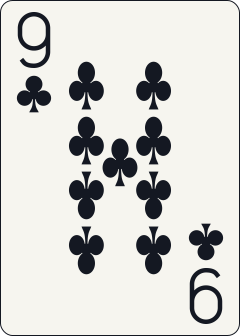
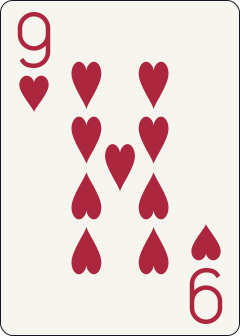
Collect four cards of the same rank.
Signal your partner
With four of a kind, perform your agreed tell. Your partner calls Kemps. Calling on your own four cards does not work: Kemps always checks your partner's hand. You may bluff with tells, but a false signal can cause your own partner to make a wrong call.
Catch another team
Choose an opposing team and press Stop Kemps if you believe either of its players has four of a kind. The call is checked against their actual cards when it arrives. Every call ends the round. Review shows the hands and score; deal the next round to continue.
Refresh the centre
After five seconds without a swap, the four centre cards go to the discards and four fresh cards appear. Options offers ten seconds or unanimous voting only. Press Refresh to vote; every active player must agree. A swap clears the votes. When stock runs out, discards are shuffled back into it. This recycling rule is a table variant: traditional real-deal Kemps ends an exhausted deal without a penalty.
KEEPING SCORE
Five letters put a team out
A correct Kemps call gives every other active team its next letter in K-E-M-P-S. A correct Stop Kemps call gives just the named team a letter. Either wrong call gives the caller's own team a letter. With three or four teams, eliminated teams watch while the remaining pairs continue. Last team left wins.
For example, if your partner holds four nines and you call Kemps, your team stays on its current letters and every other team takes one. If only you held four nines, your call would be wrong and your own team would take the letter.
Points mode replaces letters with +1 for a correct call and −1 for a wrong call. The first team to reach 5 wins. Calls follow host arrival order, including conflicting calls on different teams. There is no claim collection window or client-time compensation for Kemps.
READ THE TABLE
Keep the rank, disguise the tell
Hold onto a pair while exchanging loose cards. Watch what appears in the centre and what other players take. If a rank stops improving across centre refreshes, changing target can break a stalemate.
Use decoys before your hand is ready so one gesture does not identify your signal immediately. Watch your partner rather than staring only at the centre. Opponents who stop swapping and then perform a familiar tell may be worth a Stop Kemps call, but a wrong guess penalises your team.
Computer skill
Easy keeps one target rank, swaps more slowly and sometimes gives a false signal. Standard changes target when the centre offers better cards and learns a suspected opposing signal after two revealed examples. Expert reacts faster, considers discarded ranks and can learn after one reveal. Every level sees its own hand, its own team's signal and public events only. Timing bands are modelled difficulty settings; they have not been calibrated to human players.
The fixed-signal option lets opponents learn over multiple rounds. New each round resets that evidence. In practice, Hint suggests a public-view move; Undo explains why simultaneous swaps and tells cannot be taken back.
COMMON QUESTIONS
Kemps questions
What is Kemps, and what are its other names?
A partner card game about collecting four of a kind and signalling a teammate. It is also called Kent, Cash and Canes.
How do you signal your partner online?
Choose one of five tells before play. Perform it when your four cards match in rank. Every player sees the tell, but only your partner knows which tell your team chose.
What is the difference between Kemps and Stop Kemps?
Kemps checks your partner's hand for four of a kind. Stop Kemps checks either hand on a named opposing team. Either call ends the round.
What happens if you call Kemps wrong?
Your team takes a penalty letter. In points mode it loses one point. A wrong Stop Kemps call has the same penalty.
Can you play Kemps with two players?
No. This table supports four, six or eight players in pairs. Practice fills the other seats with computer players, including your partner.
How does Kemps scoring work?
Correct Kemps gives each other team a letter; correct Stop Kemps gives the named team one. A wrong call gives your team one. Five letters eliminate a team. Points mode instead plays to 5 with +1 or −1 per call.
Can you change your signal?
The default keeps it fixed for the match. Select New each round under Options to choose again before every round; computers also forget old signal evidence.
Can the computer opponents see my hand or signal?
No. A computer knows only its own four cards and its team's signal. It learns about opposing tells from public gestures and revealed hands.
When does the centre refresh?
Five seconds after the last swap, or when every active player votes. Options also offers ten seconds or vote only. Discards recycle when the stock empties, a stated table variant.
What if two people take the same card?
The first swap arriving at the host wins. The other swap is rejected and that player's card does not move. Calls also follow host arrival order.
Is Kemps free, and can I play with friends?
Practice is free without a download or sign-up. To play with friends, open a HopLobby lobby and send one link: our party games run in the browser too.
More card games
All 35 card gamesCARD NIGHT WITH FRIENDS?
Bring everyone to HopLobby.
HopLobby is free party games in your browser. Open a lobby, send one link, and your friends join from any phone or computer, with nothing to install.
Create a lobby HopPool
 HopGolf
 HopParkour
 HopSmash