ScopaPractice
Your table is ready

Take a seat.

Three cards each. Match a single value before a sum, and clear the table for a scopa. Diamonds are coins.

Y
YouReady to play
0pts

Practice against the computer

FREE ONLINE CARD GAME

Play Scopa Online

Match a card, take the table.
Sweep it clean for a scopa.

Play Scopa, Italy's classic capture game, free against the computer with no download or sign-up, in English and with a standard deck: the 8s, 9s and 10s are removed and diamonds are the coins. Capture by matching values, sweep the table for a scopa, and score cards, coins, the settebello and primiera to 11. Choose Easy, Standard or Expert, or deal Scopone for four.

2-player Scopa · 4-player Scopone · First to 11

Updated

New to Scopa? Learn the rules

HOW TO PLAY

Scopa rules,
one capture at a time

Three cards in your hand, four on the table. Match a value to take cards, clear the table to earn a scopa, and collect the cards that matter at scoring time.

This is classic two-player Scopa with a 40-card French deck: remove the 8s, 9s and 10s, use diamonds as coins, and count A = 1, J = 8, Q = 9, K = 10. Four players can choose Scopone in opposite partnerships.

Try a practice hand ↑ · Print the scoring guide

01

Match a value, or add up a sum

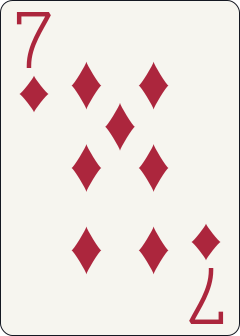
Play exactly one card. A 7 can take a table 7, or a 3 and a 4 if there is no table 7. The played card and the captured cards all belong to your pile. When several sums work, choose one: a 7 could take A + 6, 3 + 4, or A + 2 + 4. Any equal sum is legal here; some house rules require the shortest sum.

Play 7

3 + 4 = 7: both table cards can be taken.

02

A single match comes first

If the table holds a 7 and a 3 + 4, your 7 must take one 7. You cannot take the sum instead, or take both sevens at once. With two equal table cards you choose which single to take. Capturing is compulsory for the card you play, but you may choose another hand card that cannot capture.

The settebello is a legal single capture.

03

No capture? Trail the card

A card that cannot capture stays face up on the table for the next player. Pick it, then confirm Trail. Clearing the table with a capture earns one scopa; the last play of the entire hand and the final collection of leftovers earn none.

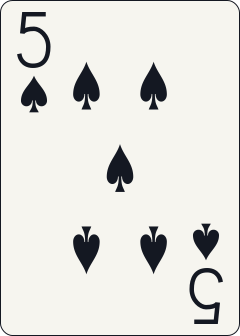
With only a 7 on the table, a 5 captures nothing.

The deal, direction and four-player Scopone

Two players get three cards each and four go face up. The non-dealer starts; play runs anticlockwise. Whenever both hands empty, deal three more each without adding table cards. Six deals use the whole deck. If the opening table has three or four kings, the same dealer shuffles and redeals.

Four-player Scopone gives nine cards to each player and four to the table, with no stock. Partners sit opposite and pool their captures and points. The dealer gives packets of three anticlockwise, adding two table cards after each of the first two packet rounds. The dealer rotates anticlockwise after every hand.

The French suits stand in for Italian suits: diamonds are coins, hearts cups, clubs clubs, and spades swords. Italian card art is not offered here.

AFTER THE LAST CARD

Four points to collect.
Scope on top.

At the end of each hand, leftovers go to the last capturer. Count each side’s pile. A tied category scores nothing.

Scopa hand points
CategoryPointWhat wins it
Cards1More captured cards; 21 guarantees it.
Coins (♦)1More diamonds; six guarantees it.
Settebello (7♦)1The side that captured the seven of diamonds.
Primiera1The best total using one card from every suit.
Scope1 eachEvery scoring table-clearing capture.
Re Bello · optional1The side that captured K♦, when enabled.

Primiera: sevens first, sixes next

Take your best primiera card in each of all four suits, then add their values. Missing a suit means you cannot win against a complete prime, even if your partial sum is higher. If both sides lack a suit, neither scores primiera.

Primiera values · different from capture values
Card76A5432J/Q/K
Value2118161514131210

For example, 7♠ + 7♣ + 6♦ + 6♥ gives 21 + 21 + 18 + 18 = 78. Four sevens make the perfect 84. Use Review hand after scoring to see each side’s four best cards.

A worked 3–3 hand

A captures 22 cards, B 18: A gets Cards. Both have five diamonds: no Coins point. B holds 7♦: B gets Settebello. A’s primiera is 78 against B’s 73: A gets Primiera. A made one scopa and B made two. The hand scores A 3, B 3.

Finish the hand, then check the target

The higher side wins when it has at least 11 points, or 21 with the longer-game option. A hand always finishes; reaching the target during play does not stop it. Tied at or above the target means another hand.

Scopa d’Assi and Re Bello

With Scopa d’Assi on, an ace must take the whole nonempty table when there is no table ace. If an ace is already there, take one matching ace. Every ace capture scores no scopa in this variant, and an ace on an empty table is trailed. Other regional ace rules differ.

Re Bello adds one point for K♦. Both options start off. Change them, the target and the player count under Options before starting a new match.

Rules checked against Pagat’s Scopone and scoring reference. This table uses single-card precedence, then any equal sum; minimum-card-count variants are not enabled.

A FEW THINGS TO WATCH

Count the sevens.
Watch what you leave.

01

Protect the settebello

The 7♦ can contribute to three categories: settebello, coins and primiera. A bigger capture is not always the better one.

02

Leave an awkward total

A table total of 10 or less might let the next player sweep with one card. Look at what will remain before you take or trail. The public play log keeps every observed card available to you.

03

Collect across four suits

Sevens are best for primiera, sixes next. A strong pile in three suits still lacks a qualifying prime; watch for your missing suit.

QUICK ANSWERS

Scopa questions

How do you play Scopa in English?

Each player gets three cards and four start on the table. Play one card to capture one equal-value table card, or a matching sum if no equal single exists. If your card cannot capture, trail it. Deal three more each whenever hands empty, score the completed hand, and play to 11.

How is Scopa scored?

One point each for most cards, most coins (diamonds here), the settebello (7♦) and primiera, plus one for every scopa. Tied categories score nothing. Re Bello optionally adds a point for K♦.

What is primiera, and how do you count it?

Choose your best card from each of all four suits. Their values are 7 = 21, 6 = 18, ace = 16, 5 = 15, 4 = 14, 3 = 13, 2 = 12, and pictures = 10. Add them; the higher complete total wins. A missing suit cannot beat a complete prime, and two incomplete sides score nothing.

What is the settebello?

The seven of coins, shown as 7♦ in this French deck. Capturing it earns one point and helps your coins and primiera totals.

Do you have to capture?

Yes, when the card you choose has a legal capture. You may play a different card that captures nothing, then trail that card instead.

Single card or sum: which must you take?

One matching single card comes first, even if a sum would take more cards. Without a single match, choose any equal sum. This version does not require the fewest cards among sums.

Does the last capture count as a scopa?

A capture clearing the table on the very last play of the hand earns no scopa. Leftovers awarded to the last capturer earn none either. A sweep ending an earlier three-card deal does count.

Can you play Scopa with a regular deck?

Yes. Remove the 8s, 9s and 10s to make 40 cards. Diamonds are coins, ace is 1, jack 8, queen 9 and king 10. Value badges show the capture values.

What is the difference between Scopa, Escoba and Scopone?

Scopa captures a table value or sum equal to the played card. Escoba combines table cards with the played card to total 15. Scopone is four-player partnership Scopa with nine cards each; select four players in Options to play it here.

How many points do you need to win?

11 by default, or 21 in Options. Complete the hand first. The higher side wins once at the target; tied sides play another hand.

How good are the computer opponents?

Easy takes the most cards. Standard weighs scoring cards and scope and avoids easy sweeps when trailing. Expert samples unseen cards and simulates the current deal using Standard play, from the public play log. No level sees your hand or the stock order. Search estimates are not a guarantee of perfect play.

Is this free, and can I play with friends?

Practice is free in your browser, without a download or sign-up. Choose two players or four-player Scopone and Easy, Standard or Expert under Options. To play with friends, open a HopLobby lobby and send one link: our party games run in the browser too.

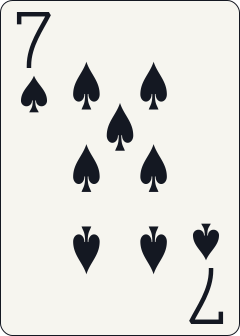
More card games

All 35 card games

CARD NIGHT WITH FRIENDS?

Bring everyone to HopLobby.

HopLobby is free party games in your browser. Open a lobby, send one link, and your friends join from any phone or computer, with nothing to install.

Create a lobby

A hand of Scopa, in three steps

  1. Choose one card. Take one equal-value table card if there is one. Otherwise, take any set whose values add up to your card. A legal capture is compulsory for the card you choose; without one, trail it onto the table.
  2. Sweep the table. Taking every table card scores a scopa, except on the hand’s very last play. Any leftover cards go to the last capturer without another scopa.
  3. Count the hand. One point each for most cards, most coins (diamonds), the 7♦ and the best four-suit primiera, plus each scopa. Tied categories score nothing. Finish the hand; the higher side wins at 11 or more. A tie continues.

Ace = 1, jack = 8, queen = 9, king = 10. Two players receive three cards at a time; four players play Scopone in opposite partnerships with nine each. Play and dealing run anticlockwise. Scopa d’Assi and Re Bello are optional.

Keys: Enter picks a card; press again to confirm its only capture. Tab and Enter choose between alternatives. Escape cancels. S sorts, A arranges, H hints, U undoes, ? opens rules.

Read the full rules and scoring