BridgePractice
Your table is ready

Bid the hand. Make the contract.

North–South against East–West. Choose Rubber or a four-deal Chicago match, with three computer levels.

Y
YouReady to play
0pts

Practice against the computer

FREE ONLINE CARD GAME

Bridge Card Game

Bid the hand.
Make the contract.

Play contract bridge free in your browser with a computer partner against two computer opponents, with no download or sign-up. The bidding box explains every call in plain English, suggests one if you want it, and the scorecard keeps rubber or Chicago scoring for you.

Rubber Bridge · 4 seats · Standard American bidding

Updated

New to Bridge? Learn the rules

LEARN THE TABLE

How to play Bridge

North–South against East–West. Bid for a contract, then take the tricks you promised.

01

Count and call

Each player gets thirteen cards. Aces are high. Count high card points: ace 4, king 3, queen 2, jack 1. North deals first here. In clockwise order, bid a level from one to seven with clubs, diamonds, hearts, spades or notrump. A level promises that many tricks beyond six: 4♠ needs ten.

At the same level, ♣ < ♦ < ♥ < ♠ < NT. A bid must outrank the last. Pass is always legal. Double an opponent’s undoubled contract; only their side may Redouble. A higher bid clears a Double or Redouble.

02

Choose, then confirm

Select a call in the bidding box to read its meaning, then confirm it. Three passes after a bid close the auction. The first player on the winning side to have bid the final strain is declarer. Four opening passes score nothing: Rubber rotates dealer; Chicago redeals with the same dealer and deal number.

North 1♠ · East Pass · South 2♠ · West PassNorth 4♠

03

Face dummy after the lead

Declarer’s left-hand opponent leads. Only then does declarer’s partner, dummy, face their hand. Declarer chooses cards from both hands, in turn. The other two hands stay closed. If your computer partner declares in practice, you may take over before the lead; this counts as assisted practice. Your partner’s hand is shown to you after the lead.

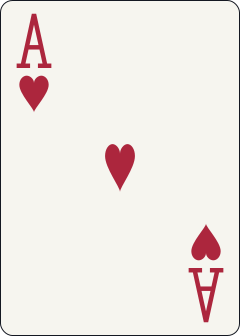
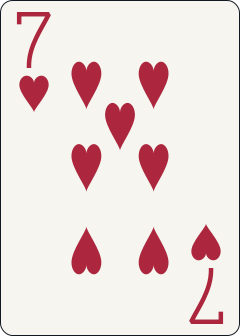
Seven of heartsDummy’s ace of hearts

04

Follow suit and win tricks

Play clockwise. Follow the led suit if you hold it; otherwise discard or trump. The highest trump wins, or the highest card of the led suit when no trump is played. At notrump there are no trumps. The winner leads next. Declarer’s partnership combines its tricks toward the contract.

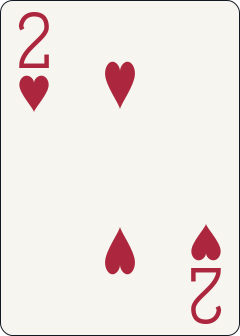
Two of hearts, a legal followAce of spades, illegal while holding hearts

05

Review the whole deal

After the deal, review all four original hands and the auction for free. During play, Last trick shows the last completed trick. With six or fewer tricks left, declarer may offer a claim between tricks and concede the rest. Opening Claim pauses play until Confirm or Keep playing; Escape also cancels. A bounded proof checks every layout consistent with public play using one fixed declarer strategy against every legal defence. It refuses uncertain or unproved claims; keep playing if a good claim needs a different plan. It never checks the actual closed defenders’ hands.

KNOW YOUR PARTNER

Our Standard American agreements

This is a declared Standard American subset, not complete SAYC, 2/1 or tournament partnership software. The same interpretation table supplies computer agreements and call explanations. Human calls remain legal when they depart from the table; unsupported continuations have no additional agreement and are read naturally. Opponents’ bids or doubles cancel the noncompetitive conventions below. A pass after a forcing suggestion is legal, but may disappoint partner.

Opening agreements
CallMeaning
1♣ / 1♦At least 12 HCP and 13 with length points. Usually the longer minor; 1♦ with four–four minors, 1♣ with three–three. Three cards can suffice.
1♥ / 1♠Five or more cards, at least 12 HCP and 13 with length. Longer major first; higher suit on a five–five tie.
1NT15–17 HCP, balanced: 4–3–3–3, 4–4–3–2 or 5–3–3–2. May contain a five-card major.
2♣Strong artificial opening, 22+ HCP outside the specified balanced notrump openings. 2♦ waits; a natural positive suit response shows five cards and 8+ HCP. Balanced 8+ may respond 2NT. Opener’s balanced rebid is 2NT with 22–24 or 3NT with 25–27.
2♦ / 2♥ / 2♠Weak two: six cards, 5–11 HCP and at least two of the top five honours. There is no weak 2♣.
2NT / 3NTBalanced 20–21 / 25–27 HCP.
Three of a suitPreempt: seven or more cards, 5–11 HCP, two top-five honours.

Responding and finding game

A new suit at the one level shows four cards and 6+ HCP; at the two level, 10+ and four cards, or five hearts over 1♠. Both ask partner to bid once more. A 1NT response shows 6–10. A major raise needs three trumps: simple raise with 6–9 support points, a three-level limit raise with 10–12, game with 13+. Minor raises need five clubs or four diamonds. Natural 2NT over a minor shows balanced 13–15 and forces to game; over a major it is a natural 11–12 invitation here, not Jacoby 2NT. Later continuations use natural fits, strength estimates and conservative sign-offs. The computer does not implement a complete tournament rebid tree.

Standard adds one length point per card beyond four. After finding a fit, it uses shortness instead: void 5, singleton 3, doubleton 1, outside trumps. Around 25 combined points suggests game; a major fit is preferable to notrump. These are estimates, not a promise that a contract makes.

Stayman and Jacoby transfers

After an uncontested 1NT or 2NT, the cheapest club response asks for a four-card major. Here it promises a major and invitational values: 8+ over 1NT, 4+ over 2NT. Opener replies in hearts first with both majors, spades with four spades only, diamonds with neither. The cheapest diamond response transfers to hearts; hearts transfers to spades, showing five cards. Opener accepts, or jumps one level with a maximum and four-card support. Responder then signs off, invites, or places game. These agreements also apply after the strong 2♣–2♦–2NT rebid.

Competitive calls

Simple overcalls show five cards and about 8–17 HCP, with 10+ at the two level. Weak jump overcalls show six cards and 5–10. A 1NT overcall shows balanced 15–18 with a stopper. Takeout doubles at the one or two level show opening values and support for unbid suits, or a strong hand. Partner chooses a natural suit: cheapest with 0–8, jump with 9–11, game with 12+. Negative doubles apply after partner’s opening and a suit overcall through 2♠: four cards in the unbid major(s), with at least 6 HCP at the one level or 8 at the two level. Other doubles are explained as penalty doubles, but the current computer policy does not initiate them.

Blackwood and limits

With a suit fit agreed, 4NT asks for aces: 5♣ zero or four, 5♦ one, 5♥ two, 5♠ three. After accounting for all four aces, 5NT asks for kings by the same pattern at the six level. Without an agreed suit, 4NT is a quantitative notrump invitation. The computer makes conservative slam decisions from its strength estimate and these answers; it does not solve the deal during bidding.

Not played: 2/1 game force, Jacoby 2NT, splinters, Roman Key Card, Gerber, Michaels, Unusual NT, Lebensohl, fourth-suit forcing, new minor forcing, Drury, Bergen, Texas, feature-asking 2NT after a weak two, or a special defence to 1NT. A human can legally make such a call, but computer partner will not infer that convention.

Sources for the base approach: ACBL’s SAYC booklet. The modifications and omissions above define this table.

BELOW AND ABOVE THE LINE

Bridge scoring

Only bid-and-made contract tricks score below the line: clubs and diamonds 20 each; hearts and spades 30; notrump 40 for the first and 30 thereafter. Double multiplies these by two; Redouble by four. A contract failing by any number scores no contract or overtrick points.

4♠ · ten tricks taken120 below · game

Made-contract additions, above the line
ItemNot vulnerableVulnerable
Undoubled overtrick20 in a minor; 30 in a major or notrump
Doubled overtrick100200
Redoubled overtrick200400
Made doubled / redoubled50 / 100
Small slam, level six500750
Grand slam, level seven1,0001,500
Undertrick penalties paid to defenders
ContractNot vulnerableVulnerable
Undoubled50 each100 each
Doubled100 first; 200 second and third; 300 each thereafter200 first; 300 each thereafter
RedoubledTwice the doubled schedule

Rubber

Accumulate 100 below the line to win a game. Both sides’ current partscores then close; earned trick points remain in the total. A side that has won a game becomes vulnerable. The second game wins the rubber, adding 700 if opponents won no game or 500 if they won one. The higher cumulative total wins the match, which can differ from the side that completed the rubber. Equal totals draw.

Honours are automatic, from one original hand: four of the five trump honours (A K Q J 10) earn 100; all five earn 150. At notrump, all four aces in one hand earn 150. Partners cannot combine cards for honours. Defenders may earn them even when declarer makes.

Chicago

Four played deals. Vulnerability is nobody on deal one, the dealer’s side on deals two and three, both sides on deal four. This table uses duplicate-style immediate bonuses: +50 for a made partscore, or +300 not vulnerable / +500 vulnerable for a made game. No partscore carry-over, honours or rubber bonus. A passed-out deal does not advance the count or dealer. Higher total after deal four wins. Other Chicago tables may carry partscores; that version is not selected here.

Base rules: ACBL Laws of Rubber Bridge. The selected Chicago bonus treatment is stated above; the ACBL appendix also describes carry-forward Chicago.

PLAY WITH A PLAN

Bridge tips and computer levels

Learn one set of agreements

Keep explanations on while learning. HCP is arithmetic, not a guarantee of tricks. A five-card suit may grow winners; three-card support for partner’s five-card major can make an eight-card fit. Read a call’s meaning before confirming, and use the auction review to understand what your partner expected. Suggested bidding makes the practice record assisted.

Count before touching dummy

At notrump count sure winners and decide which suit can supply the rest. In a trump contract, count likely losers and useful ruffs in dummy. Leading toward an ace–queen may let the queen win when the missing king is favourably placed. Drawing trumps helps stop enemy ruffs, but can spend the trumps dummy needs for your own ruffs.

Choose the computer level

Easy uses HCP without distribution adjustments, sometimes passes instead of bidding, leads randomly and mixes simple low-winning play with random legal cards. It never initiates a slam. Standard uses the printed bidding agreements, length/support points, top-of-sequence and fourth-best leads, second hand low, third hand high, returns partner’s suit and tries simple public-dummy finesses. It has no complete plan for every hand.

Expert uses Standard’s bidding. For card play, it samples unseen hands while retaining exact counts, played cards and shown voids. Auction HCP and shape expectations are soft preferences because people can deviate. It compares fixed-size batches of legal heuristic continuations, keeping Standard’s choice unless another improves the sample estimate by at least a tenth of a trick. These are not exact double-dummy solutions, certified strength or a uniform statistical posterior. No planned squeezes or deceptive signalling. Computation runs in a background worker; a failure uses Standard. All computers, including your partner, use the selected level.

Keep the record honest

Practice hints, automatic suggested calls, takeover, guided play and Undo mark assisted play. Explanations and HCP alone do not. Undo is personal practice only, ends when another seat acts, and is blocked after the opening lead reveals dummy.

QUICK ANSWERS

Bridge FAQ

Can I play Bridge online free against the computer?

Yes. This practice table has a computer partner and two computer opponents, with no account or download. Choose Rubber or a four-deal Chicago match.

Which Bridge website is best for me?

This table is for casual practice with explained bidding and free deal review. If you want organized tournaments or a broader partner pool, compare services such as Bridge Base Online, Funbridge and your national bridge organization.

Is Bridge hard to learn?

Card play is straightforward: follow suit and win with the highest led card or trump. Partnership bidding takes practice. Start with the printed agreements, explanations and optional suggested calls.

How long does a game of Bridge last?

Chicago is four played deals. Rubber lasts until a side wins two games and can take more deals. Your bidding, thinking time and selected computer speed determine the duration; there is no practice turn timer.

How does Bridge scoring work?

Made contract tricks score below the line; overtricks, penalties and bonuses above. In Rubber, 100 current below-line points make game and two games finish the rubber. Chicago here awards immediate partscore or game bonuses across four deals. The scoring tables above show the exact amounts.

What bidding system do the computers use?

The declared Standard American subset above: five-card majors, 15–17 notrump, strong 2♣, weak twos, Stayman, Jacoby transfers, raises, takeout and negative doubles, and plain Blackwood. It is not complete SAYC or 2/1; unsupported continuations have no extra agreement.

What are high card points?

Ace 4, king 3, queen 2, jack 1: forty HCP in the deck. Standard also considers length and shortness after a fit. Shape points are not HCP.

What is the difference between Rubber, Chicago and duplicate Bridge?

Rubber carries current partscores until game and ends after a side wins two games. Chicago has four played deals and a fixed vulnerability schedule. This version uses immediate bonuses. Duplicate compares the same deals across different tables and is not offered here.

Can I download the game or resume after a reload?

It runs in the browser without a separate app. Practice is saved in this browser; after reloading, choose Continue to resume. Clearing browser storage removes that local save.

What are common beginner mistakes?

Confusing HCP with distribution points, raising a five-card major on only two trumps, forgetting a forcing agreement, and playing before counting winners or losers. Hints show the Standard computer’s suggestion, which is guidance rather than a guarantee.

Can I play dummy myself?

Declarer always controls dummy. If your computer partner declares in practice, you may take over both hands before the opening lead and remember that choice. This marks assisted practice.

Does Expert see my cards?

No. Decisions receive the acting computer’s hand and public information, including dummy after the lead. Expert models possible closed hands. Its sampled legal continuations are estimates, not access to the actual hidden cards.

More card games

All 35 card games

CARD NIGHT WITH FRIENDS?

Bring everyone to HopLobby.

HopLobby is free party games in your browser. Open a lobby, send one link, and your friends join from any phone or computer, with nothing to install.

Create a lobby

Bridge, at this table

Four players, partners opposite. You are South, with North as partner. Thirteen cards each, aces high. The auction sets a contract: level plus six tricks, in a trump suit or notrump.

Bid higher, Pass, or use a legal Double or Redouble. Three passes after a bid end the auction. The first player of the winning side to bid its final strain declares. Their left-hand opponent leads; then dummy faces. Declarer plays both partnership hands. Follow the led suit whenever possible.

Rubber ends when a side wins two games; the higher cumulative total wins. Chicago uses four played deals with immediate +50 partscore or +300/+500 game bonuses and no honours. Passed-out Rubber rotates dealer; Chicago keeps the same dealer and count.

The guide prints the supported Standard American agreements. A sufficient call is legal even when it departs from them. Suggested bidding and practice takeover mark assisted practice. Computer difficulty also applies to your partner.

Read the rules and bidding system

Claim remaining tricks

Play waits while you choose. Unclaimed tricks go to the defenders. The table must prove your claim against every public-consistent defence using one fixed play strategy. A refused claim can still be playable: keep going.