SpadesPractice
Your table is ready

Take a seat.

Four players, two partnerships. Bid your tricks, mind the bags, first side to 500.

Y
YouReady to play
0pts

Practice against the computer

FREE ONLINE CARD GAME

Play Spades Online

Bid your tricks. Mind the bags.
First team to 500 wins.

Play classic partnership Spades free against three computer opponents with no download or sign-up. Bid your tricks, go nil when the hand is right, watch the bag count, and race to 500 points. Choose Easy, Standard or Expert opponents.

Classic Spades · 4 seats · First to 500

Updated

New to Spades? Learn the rules

HOW TO PLAY

How to play
Spades

Four players in two partnerships, 52 cards, thirteen each. Spades are always trump.

You and the player opposite are partners. Every hand has a bid and thirteen tricks; the first side to 500 wins.

Try a practice hand ↑
01

Bid the tricks you will take

Starting left of the dealer, each player bids once: a number from 1 to 13, or nil (0), a promise to take no tricks at all. There is no passing. Partners' bids add up to the team bid; a nil is scored on its own.

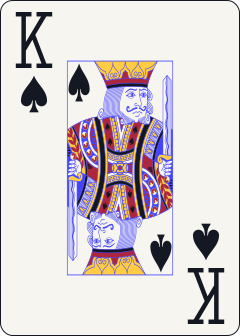
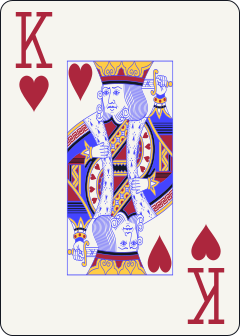
You bid 3 · ace and king of spades, and a king with one heart beside it: 2½ sure tricks.
Wren bids nil · no aces, low cards in every suit.

With your partner Ash on 2, your side's bid is 5. Rowan bids 6, so the other side's bid is 6 and Wren's nil stands alone. The table has bid 11 of the 13 tricks: 2 under, so at least two tricks will be bags.

Blind nil: a side 100 or more points behind at the start of a hand may bid nil before looking at its cards, for 200 points either way. Each player of that side chooses in turn: bid blind nil, or look at the cards and bid as usual.

Two bids per side; a nil is scored on its own.

02

Follow suit; spades win

The player left of the dealer leads the first trick. Everyone must follow the suit led if they can. A player who cannot may play any card, and a spade beats every card of another suit. The highest spade wins the trick, otherwise the highest card of the suit led. The winner leads the next trick.

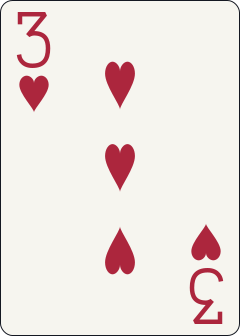
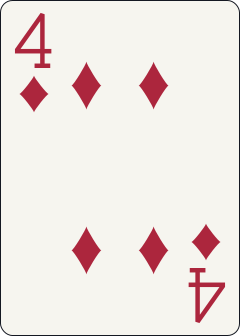
Out of diamonds · the 3♠ beats the ace of diamonds, and spades are now broken.
No spade played · the highest heart, the king, takes it.

Spades must be broken before anyone leads one: a spade has to be played on another suit first, unless the leader holds nothing but spades. On the first trick nobody may play a spade unless they hold only spades.

Card order with jokers
  • Standard deck: A K Q J 10 … 2 in every suit; any spade beats any other suit.
  • Big & little joker: big joker, little joker, then A♠ K♠ … 2♠. The 2♦ and 2♣ are taken out so the deck stays at 52.
  • Joker Joker Deuce Deuce: big joker, little joker, 2♦, 2♠, then A♠ K♠ … 3♠. The 2♦ counts as a spade; the 2♣ and 2♥ are taken out.
  • Claim the rest: on your lead, with two or more cards left, if every card you hold is sure to win and no nil is still in play, claim the remaining tricks.

A spade played on another suit breaks spades.

03

Make the bid, mind the bags

A side that takes at least its team bid scores 10 per trick bid plus 1 per extra trick. Every extra trick is also a bag, and bags carry from hand to hand. When a side reaches ten bags it loses 100 points and the count drops by ten.

Bid 5, took 7
+52 · 2 bags
  • Bid 3 + 2 = 5, took 7: +52 and 2 bags.
  • Holding 9 bags, bid 4 and take 6: +42, then the tenth bag costs 100: −58, and the count is 1.

Overtricks score 1 each, but ten of them cost 100.

COUNT THE HAND

Spades scoring

Each side scores its own contract. Made: 10 points per trick in the team bid, plus 1 for every trick over it. Set: fall short and lose 10 per trick bid. A nil scores 100 if that player takes no tricks and loses 100 if they take even one; a blind nil is worth 200 either way. Tricks taken by a nil bidder count as bags for the side but score nothing and do not help the partner's bid.

  • Bid 5 (3 + 2), took 7: +52, 2 bags.
  • Bid 6, took 5: −60.
  • Nil made, partner bid 4 and took 5: +100 +41 = +141, 1 bag.
  • Nil failed with one trick, partner bid 4 and took 4: −100 +40 = −60, and the nil trick is 1 bag.
  • Blind nil made, partner bid 3 and took 4: +200 +31 = +231.

The first side to 500 wins (300 in a short game). A side at −200 or lower loses at once, even if the other side passed 500 on the same hand. If both sides pass the target together, the higher score wins; equal scores play another hand. You can switch the bag penalty off in Options: overtricks still score 1 each, and no bag count is kept.

Made
10 × bid + bags
Set
−10 × bid
Nil
±100
Blind nil
±200
10 bags
−100

READ THE TABLE

Spades strategy
for winning partnerships

Count your bid

Start with sure tricks: the ace of spades, the king of spades with the ace or two more spades beside it, and side-suit aces. Every spade beyond your third is worth about half a trick, because spades win once the others run out, and with three or more spades a void or a single card in a side suit adds half a trick, since you can trump it. A side king counts half a trick with one or two cards beside it; alone, or in a long suit where it is often trumped, it counts nothing. Partners' cards make a hand take a little more than its sure count, so the suggested bid in practice is the count plus a half, rounded: 2½ sure tricks suggest 3, three suggest 4.

When to bid nil

A nil hand has no aces, no more than one king, two or fewer spades with none above the 7, and a card of 5 or lower in every side suit so you can always play under. Long suits are fine if they are low. One high spade is the usual way a nil dies: you cannot get rid of it until spades are led. The practice nil-risk line shows how often your hand survived nil in simulated deals.

Cover your partner's nil

When your partner bids nil, your job is to take the tricks they might win. Lead high cards so your partner can play under them, play high before your partner when you can, and overtake a trick your partner is winning. The extra tricks you take become bags, which is a fair price for 100 points.

Set a nil

Against a nil, lead low cards in suits the nil bidder still holds and keep your own low cards so you can play under them later. When the nil bidder is winning a trick, play underneath and let the card stand.

Avoid bags when you are ahead

Once your side has its bid, extra tricks are bags. With seven or more bags, duck tricks you do not need: play your highest card that still loses. Sometimes taking a bag is still right, when it sets the other side's bid.

Pull spades and read the meter

With four or more spades, or once your contract is safe, lead spades to draw the other side's trumps so your side suits can win. The over/under meter on the table shows the total of all four bids against 13: under means spare tricks (bags) are coming; over means at least one side will be set, so fight for every trick.

QUICK ANSWERS

Spades FAQ: common questions

How do I play Spades?

Four players in two partnerships get thirteen cards each. Starting left of the dealer, everyone bids the number of tricks they expect to take; the partners' bids add up to a team bid. The player left of the dealer leads, you must follow suit when you can, and spades beat every other suit. Make your team bid to score ten points per trick bid; fall short and lose ten per trick bid. The first side to 500 wins, and a side at minus 200 loses.

How do I play Spades online with real people?

The practice table on this page plays against three computer players: your partner and two opponents. To play with friends, open a HopLobby lobby and send one link: our party games run in the browser too.

Can I play Spades online free without an app?

You do not need an app for this table. It runs in a phone or desktop browser with no download, no account and no ads between hands, offers Easy, Standard and Expert computer players and the common house rules as options, and saves your practice match so a refresh offers to continue it.

Is there a Spades game that pays real money?

Not here. This is a free game with no stakes, chips or prizes. Sites that advertise Spades for money are gambling sites, not the card game on this page.

What are bags?

Every trick your side takes beyond its team bid is a bag and scores one point. Tricks taken by a partner who bid nil also count as bags but score nothing. Bags add up across hands, and when a side reaches ten it loses 100 points and the count drops by ten. The table and the scorecard show each side's count, and you can switch the penalty off in Options.

What is nil, and what is blind nil?

Nil is a bid to take no tricks at all. Make it and your side gains 100; take even one trick and it loses 100. Blind nil is nil declared before you look at your cards, worth 200 either way, and it is offered only when your side is 100 or more points behind at the start of the hand. Your partner still bids and plays for tricks, and the nil is scored apart from your partner's bid.

What does “set” mean?

A side is set when it takes fewer tricks than its team bid. It loses ten points for every trick in the bid, so a set on a bid of six costs 60. Setting the other side, especially on a big bid, is often worth taking a bag or two.

When can I play a spade?

You must follow the suit that was led when you can. If you cannot, you may play a spade, and that breaks spades. Until spades are broken nobody may lead one, unless spades are all they hold. On the first trick a spade is allowed only if you hold nothing else.

Can I play Spades with jokers?

Yes. Choose Jokers in Options. With the big and little joker, the two jokers become the two highest spades, above the ace, and the two of diamonds and two of clubs are taken out so the deck stays at 52 cards. A joker counts as a spade for following suit and for breaking spades.

What is Joker Joker Deuce Deuce?

A popular house version of Spades, offered in Options. The top spades are the big joker, the little joker, the two of diamonds and the two of spades, then the ace of spades down to the three. The two of diamonds counts as a spade, so it cannot follow a diamond lead. The two of clubs and two of hearts are taken out, leaving 52 cards and sixteen spades.

How long does a game take, and can two or three people play?

A match to 500 between steady players usually runs 9 to 15 hands (about 11 is typical); set Game length to 300 in Options for a match of about 5 to 9 hands. This table is built for four players in partnerships; with fewer friends, computer players fill the other seats.

How good are the computer players?

Choose Easy, Standard or Expert in Options; your partner plays at the same level as the opponents. Easy bids its aces, kings and high spades, sometimes one too many, never bids nil, and often plays its highest card. Standard counts sure tricks to bid, bids nil only on a safe hand, covers a partner's nil, attacks yours and ducks bags at seven or more. Expert bids like Standard but tests nil in 150 simulated deals and checks each card in simulated deals. No level sees your hand or any card it could not see at a real table.

Is there a hint, a suggested bid or a nil-risk check?

Yes, in practice. When it is your turn to bid, a Suggested chip shows what the Standard computer would bid and why, and a line under it says how often your hand survived nil in 60 simulated deals and which high cards are exposed. Hint suggests a card during play, and the guided first hand walks you through a whole hand.

Can I play Spades full screen?

Yes. Press Full screen under your cards, or the F key, to fill the screen with the table; press it again or Escape to leave.

More card games

All 35 card games

CARD NIGHT WITH FRIENDS?

Bring everyone to HopLobby.

HopLobby is free party games in your browser. Open a lobby, send one link, and your friends join from any phone or computer, with nothing to install.

Create a lobby

A hand of Spades, in three steps

  1. Bid once, starting left of the dealer: 1 to 13 tricks, or nil (no tricks). Partners' bids add up to the team bid. A side 100 or more behind may bid blind nil before looking.
  2. Play thirteen tricks. Follow suit if you can; spades beat every other suit. Nobody may lead a spade until one has been played on another suit, and no spade on the first trick unless you hold only spades.
  3. Score: made = 10 per trick bid + 1 per extra trick (a bag); set = −10 per trick bid; nil ±100, blind nil ±200; ten bags cost 100.

First side to 500 wins; a side at −200 or lower loses.

Keys:

Read the full rules