
Draw two cards
Start your turn with two cards from the stock. A red three goes straight to the table beside your side's melds and is replaced from the stock.
Stock
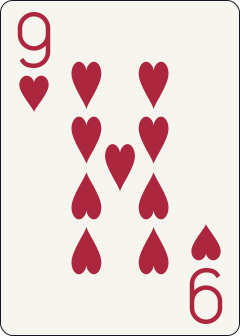
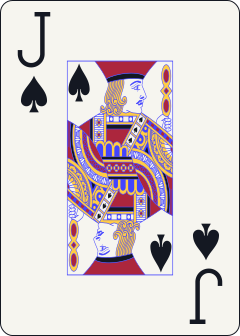 Your hand
Two cards from the stock, every turn.
Take a seat.
Hand of 11, foot of 13. Build books of seven over four rounds.
HAND COMPLETE
Waiting for the host to deal.
FREE ONLINE CARD GAME
Play the hand.
Then the foot.
Play Hand and Foot, the Canasta cousin, free in your browser with no download or sign-up. Partner with a computer player against two more at Easy, Standard or Expert, or play head-to-head with 2 players. Build books of seven, pick up your foot, and score over four rounds.
Hand and Foot · 2–6 seats · Four rounds
Updated
New to Hand and Foot? Learn the rulesHOW TO PLAY
Two piles each: a hand of 11 cards and a face-down foot of 13. Play out the hand, pick up the foot, and build books of seven with your partner.
Four players play as two partnerships, partners sitting opposite. Five decks with jokers are shuffled together: 270 cards. Each round has the same three-step turn.
Start your turn with two cards from the stock. A red three goes straight to the table beside your side's melds and is replaced from the stock.
Your handTwo cards from the stock, every turn.
A meld is three to seven cards of the same rank. Wilds (2s and jokers) can join a meld, but natural cards must always number at least twice the wilds. Threes never meld. Your side keeps one open meld per rank, and either partner may add to it.
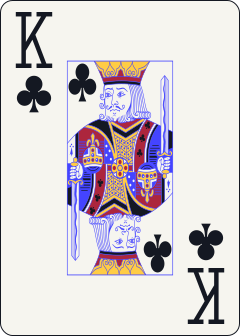
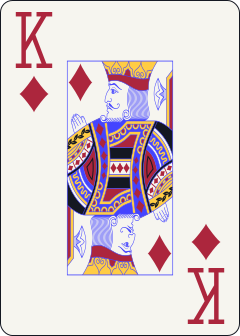
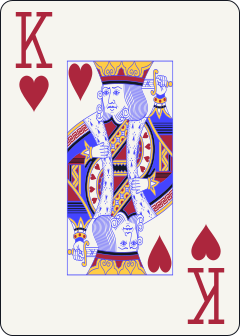
Round minimum: your side's first melds each round must add up to 50 points in round 1, then 90, 120 and 150. Select every card for those first melds and press Meld once; the button counts the points as you select.
Naturals at least twice the wilds.
A meld that reaches seven cards closes as a book. With no wilds it is clean (500); with one or two wilds it is dirty (300). Seven wilds together make a wild book (1,500). The table's book tracker counts them for each side.
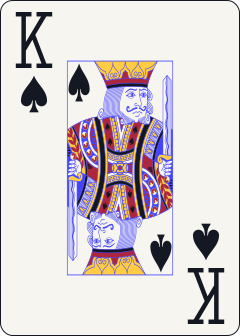 Six kingsClean 1/2 → 2/2
Clean 1/2 on the tracker.
Instead of drawing, you may take the top seven cards of the discard pile (all of them if fewer) when you hold two natural cards matching the top card. The top card and your pair go straight to the table as a meld; the other six join your hand.
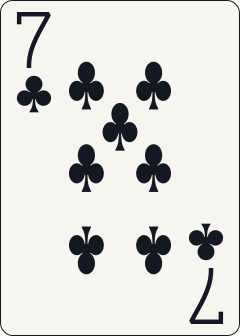
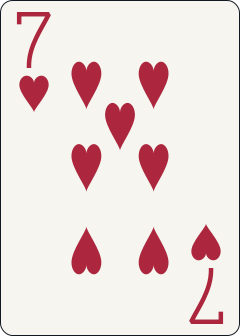 Your pair
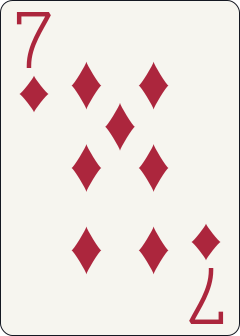 Top discardMeld, plus six cards
You cannot take the pile when a black three or a wild is on top. Discarding a black three blocks the pile for the next player.
A natural pair matching the top card.
When your hand runs out, the foot becomes your hand. Empty it by melding and you keep playing the same turn; empty it with your discard and you pick up the foot, then your turn ends.
 Your new hand
Going out: meld or discard your last card from the foot. Your side needs two clean and two dirty books (the host can change this), and with a partner you ask “May I go out?” first. A yes lets you go out this turn; a no means keep playing.
Hand first, then the foot.
FOUR ROUNDS
At the end of each round every side adds its books, red threes, the value of every card it melded and 100 for going out, then subtracts every card still in its players' hands and feet. An unplayed foot counts in full. The highest total after four rounds wins; a tie plays a fifth round at a 150 minimum.
Worked example: you and your partner close one clean book (500) and two dirty books (600), hold one red three (+100), melded cards worth 410 and go out (+100). Your partner is left with a jack and a 5 (−15). Round score: 1,695.
PLAY AS A TEAM
Clean books are the hard part, so keep wilds out of melds that could still close clean. Put your wilds where they finish a dirty book: a meld of five or six natural cards becomes a 300-point book with one or two wilds.
Thirteen unseen cards in your foot count against your side if the round ends first. Meld steadily, and empty your hand by melding rather than discarding so you can keep playing from the foot in the same turn.
A big pile is worth taking with a natural pair. When the other side holds pairs of what is on top, a black three blocks them for a turn; a discarded wild keeps the pile frozen until a natural card covers it.
Going out earns only 100, and it also stops the round with your partner's cards counting against you. If your partner holds a near-book or a heavy hand, a no can be worth more than the bonus. Expert computer partners weigh exactly that.
Easy bots meld what they can, forget some plays and rarely take the pile. Standard bots build from their biggest ranks and play out their cards once the books are made. Expert bots take more piles, race to their foot, remember which ranks the next player throws away, and ask to go out only when they can play out. No level sees your hand, your foot or the stock.
QUICK ANSWERS
Yes. Choose 2 players in Options and each of you plays alone with three decks: the same hand and foot, the same books, and no partner question.
Yes, here, in your browser against the computer. No download, no account.
One 54-card deck (with jokers) per player plus one: five decks for four players, 270 cards. Two players use three decks.
You are dealt two piles. The hand (11 cards) is played first. The foot (13 cards) stays face down until your hand is empty, then it becomes your hand.
A book is a meld of seven cards of one rank. Clean has no wilds (500 points), dirty has one or two wilds (300), and a wild book is seven 2s and jokers (1,500). The tracker shows how many your side has made.
50 in round one, then 90, 120 and 150. Your first melds of the round must add up to at least that, and the Meld button shows the count as you select cards.
Your side needs two clean and two dirty books by default (the host can require a wild book too, or only one of each; extra clean books count as dirty ones), you must have picked up your foot, and your partner must say yes.
By default you take the top seven cards, and only with two natural cards matching the top card. The host can switch to taking the whole pile.
Red threes go to the table when drawn and score 100 each, or minus 100 if your side never melds that round. Black threes cannot be melded; discarding one blocks the pile for the next player, and one left in your hand costs 5.
Each round, add your books, red threes, the value of your melded cards and 100 for going out, then subtract every card left in your side's hands and feet. The highest total after four rounds wins.
Yes. Use “Print the rules” at the top of the rules: it prints the rules and scoring on their own, without the table, as a one-page summary to keep beside the cards.
CARD NIGHT WITH FRIENDS?
HopLobby is free party games in your browser. Open a lobby, send one link, and your friends join from any phone or computer, with nothing to install.
Create a lobby HopPool
 HopGolf
 HopParkour
 HopSmash